

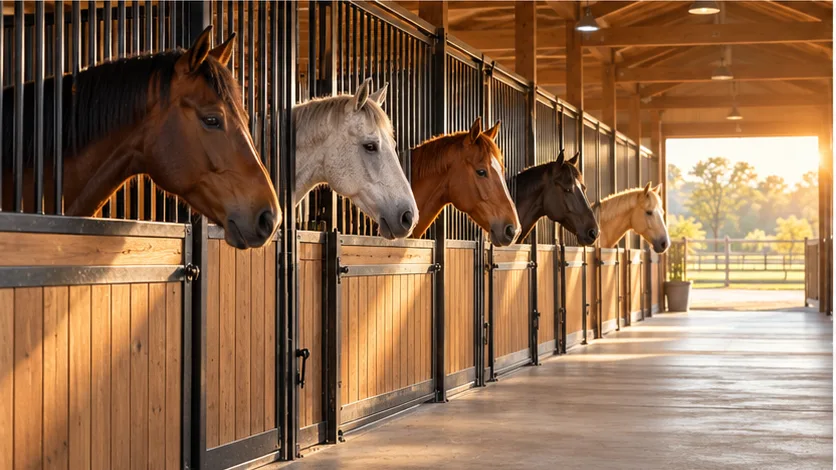
Ask any equine vet what an owner can do to keep a stabled horse healthy, and a consistent routine will be near the top of the list. Horses are creatures of habit, and their digestive system responds badly to sudden change. A good feeding routine is one of the cheapest forms of prevention a stable can have.
Why routine matters
UConn Extension lists maintaining a regular feeding schedule among its main strategies to prevent colic. The University of Liverpool’s equine team advises keeping feeding routines “as consistent as possible”, and notes that colic risk is higher in the 7 to 14 days after a change in diet. Stabled horses depend entirely on people for their meals, so they feel any disruption to the routine most.
Set fixed feeding times
Pick feeding times you can keep every day, including weekends and holidays, and space meals evenly. Auburn University recommends feeding on a regular schedule, ideally every 12 hours for two meals a day, or about every 8 hours when a horse needs three meals. Write the schedule down and post it in the feed room so every person who feeds follows the same plan.
One plan per horse
In a busy stable, horses often have different rations, supplements or medication. Mistakes usually happen when a different person covers a shift. A clear feed chart for each horse, with the feed, the weight per meal and the times, removes most of the guesswork. Weigh portions rather than scooping by eye.
Change one thing at a time, slowly
New hay, a different grain or a move to pasture are all changes the gut needs time to adapt to. The guidance from extension services:
- Change the diet gradually over two to three weeks (University of Liverpool).
- When switching grain, allow at least two weeks and adjust by small amounts, with a day or two between increases (Auburn University).
- Avoid making more than one change at once, and watch closely for signs of colic afterwards (UConn Extension).
- If a horse travels for a few days, take its usual feed with you.
Plan for days off and emergencies
Most routines break on the days the usual person is not there. Agree who covers each feed, keep the feed chart up to date, and make sure the cover person knows about any medication. Turnout and exercise matter too: Liverpool recommends at least one hour of turnout or exercise a day, as more time stabled is linked to a higher colic risk.
Daily checks that take two minutes
- Did the horse finish its last meal?
- Is there fresh water and enough forage?
- Are the droppings normal in amount and consistency?
- Is the horse behaving normally?
How AK Feeder helps: each AK Feeder unit has its own control unit and feeding plan, so every horse gets its own meals at the same times every day, even when the usual staff are off. Plans can be changed from the AK Feeder app. Ask us about your stable.
Sources
- Nadeau, J. Colic: Its Risk Factors and Prevention. UConn Extension, EXT100
- University of Liverpool, Equine. Preventing colic in horses
- Walker, M., da Silva, L. and Dillard, L. 10 Rules for Feeding Horses. Alabama Cooperative Extension System, ANR-1355
This article is general information and does not replace advice from your veterinarian.