

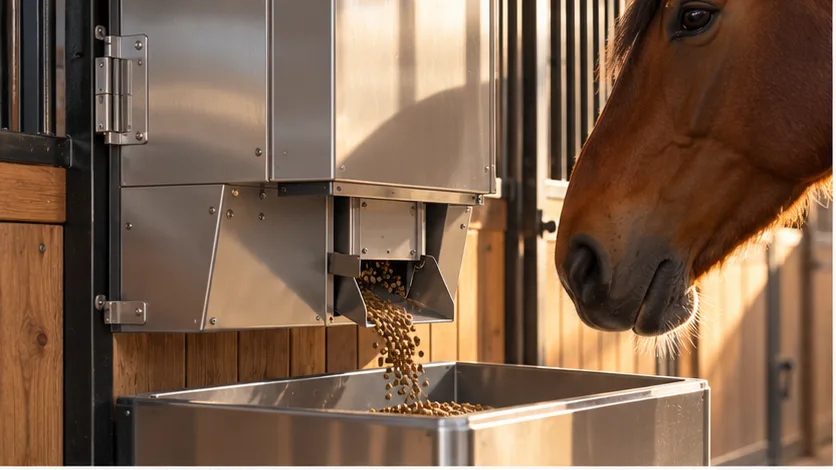
Equine nutrition guidance keeps coming back to the same two ideas: feed concentrates in smaller meals, and feed at the same times every day. Both are easy to agree with and hard to keep up by hand, especially when a horse needs three or four meals a day. Automatic feeders were developed to close that gap.
What an automatic feeder does
An automatic feeder holds a supply of concentrate feed, such as pellets or grain, and releases a measured portion at the times you set. Depending on the model, the schedule is set on the unit itself or from a phone app. The horse still needs forage and water as usual; the feeder handles the concentrate meals.
Why stables use them
- Smaller, more frequent meals. Extension specialists advise splitting grain into two or three meals once it goes above 0.5% of body weight a day, and three or four meals for larger rations. A feeder can serve those extra meals without extra trips to the stable.
- The same time, every day. A regular feeding schedule is one of the main colic prevention steps listed by UConn Extension. A feeder keeps to the schedule on weekends and holidays.
- Consistent portions. Feeding by weight is more accurate than scooping. A calibrated feeder delivers the same portion each time.
- Less daily labour. Staff time moves from measuring and serving every meal to refilling the reservoir and checking the horses.
What to look for when choosing a feeder
- Portion accuracy. Ask how accurate the portions are and whether the unit can be calibrated for different feeds, since feeds differ in density.
- Reservoir capacity. A bigger reservoir means fewer refills. Work out how many days of feed it holds for your ration.
- Build quality. Stables are dusty and damp. Stainless steel resists rust and corrosion and is easy to clean.
- Control and scheduling. Can you set the number of meals, the times and the portion size? Can you change them remotely?
- One plan per horse. In a shared stable, each horse may need a different ration. Check whether each unit can run its own plan.
- Feed compatibility. Make sure the mechanism handles your feed type, from small pellets to larger mixes, without jamming or leaking.
- Power. Check the power supply and whether there is a backup or solar option for barns with unreliable power.
- Reminders and records. App reminders for refills or medication schedules help the whole team stay on track.
- Retrofit options. If you already own feeders, ask whether they can be connected to a smart system rather than replaced.
What a feeder does not replace
A feeder serves the meals you plan; it does not decide the diet. Set the ration with your vet or nutritionist, keep forage and water available, and check every horse in person each day.
How AK Feeder fits
For reference, here is how AK Feeder answers the checklist above:
- Motor speed calibrated for each feed type, and up to 100% weighing accuracy with the WiFi Timer.
- A 25 kg reservoir in a 304 stainless steel body.
- Meals, times and portions set from the AK Feeder app (WiFi Control Feeder) or from the panel on the unit (Manual Control Feeder).
- One control unit per feeder, so every horse can have its own plan.
- App reminders for the medical schedule and tank refills.
- Feeders are 12V devices that plug into 220V mains; the 12V WiFi Timer suits solar power on remote farms.
- 1-year warranty, worldwide delivery, and installation in Turkey and Palestine.
- The WiFi Timer connects feeders from other brands to the AK Feeder app.
See the AK Feeder range or request a quote.